Art After Manufactured Certainty
How can art expose and reroute predictive power?
Contents
Today’s crisis isn’t missing information or manufactured doubt, it’s systems that already know too much. Every tap, swipe, and prompt trains models that quietly steer our next move, performing futures into being. These layers of manufactured certainty convert uncertainty into confidence, engineered at scale and sold as a service. Reading four of my works alongside seven by other artists, I propose Predictive Realism: art that takes forecasting systems as material, making their loops visible, then turning them against their own forecasts to keep the future contestable.
1. Manufactured Certainty
In the 20th century, media companies decided what reached the public. Newspapers, radio, and television filtered speech to serve owners, advertisers, and states—the propaganda model Herman and Chomsky described in Manufacturing Consent (1988). The early web cracked that system open: anyone could publish a page, start a blog, link to one another, and build communities. Then the openness was re-enclosed.
Google turned page links into rankings and ads. By the late 2000s, social platforms scaled free, venture-subsidized participation until network effects became their moat and users’ attention became real estate. Time-ordered feeds gave way to algorithmic ones that ranked, recommended, predicted, and optimized every moment of screen time. Instagram became the art world’s home channel while dissolving the line between artist and influencer. TikTok learned our habits almost faster than we form them. The same platforms that carried the Arab Spring, Gezi, and Black Lives Matter then began deciding what could be seen, and by whom. You can post anything, but it may never reach its audience. Attention became something allocated, bought, and sold.
That predictive logic ran through finance, logistics, and retail for decades before it reached the feed, and it shapes what you see, what you buy, even what you believe. Opting out isn’t easy. As McKenzie Wark argues, today’s ruling class isn’t defined by land or factories but by the vectors along which information moves: the vectoralist class, those who own the channels through which information travels (Wark 2004; 2019).
Large language models such as ChatGPT, Gemini, and Claude push the same logic inward. The feed predicted your next click. The model supplies your next word, code, and artifacts, fine-tuned toward benchmarked use cases and measured preferences. The language available to you as you think and write arrives pre-engineered. Expression is still free; free cognition is up for debate. As the system learns your context, its suggestions improve, you trust them more, and vigilance and self-awareness get harder to maintain.
And agentic AI is now entering everyday workflows. This is automated software running its own loop of deciding and acting, taking the predicted step on your behalf. The certainty tightens by degree. Prediction is epistemic, a claim to know what you will do. Recommendation is normative, a claim about what you should want. Execution is operational: the system simply acts, so the question of what you would have chosen never arises.
None of these regimes replaced the one before it. The censored broadcast, the filter-bubble feed, and the AI agent acting on our behalf coexist, layered: broadcast still sets agendas, feeds still allocate attention, agents now pre-commit actions. Control here works as Deleuze described it: not enclosure but continuous modulation (Deleuze 1992). Together they form what I call manufactured certainty: the systematic conversion of uncertainty into confidence, engineered at scale and sold as a service. Its oldest layer filtered the past and present. Its newest pre-arranges the future. It is wider than surveillance capitalism’s business model of extracted data and prediction products (Zuboff 2019). It runs from the censor’s filter to the agent’s execution, and what it sells is not insight into the future but the foreclosure of alternatives. Accuracy is achieved not by seeing the future, but by narrowing it: removing possibilities until only the predicted path remains.
The layers also narrow differently. The broadcast filtered a channel everyone saw: the front page was a shared artifact, and what it omitted could be argued over in public. The newest layer narrows each person separately and out of sight: my foreclosed path is invisible to you and yours to me, so there is no common artifact to contest. And even awareness doesn’t restore agency: the vectors are infrastructure, and the inertia of lock-in makes withdrawal or protest nearly impossible from inside. As Wark argues, an infrastructure of this scale can be neither negated nor accelerated. The remaining option is to design a different one (Wark 2016).
The crisis is no longer missing facts, but infrastructures that claim to know, and therefore decide, too much. What can art do when futures are pre-rendered? In this essay, I share my own works, map the strategies artists use to turn predictive power inside out, and propose Predictive Realism as a name for the practice.
2. In Practice
Across these works, prediction moves from the intimate to the infrastructural. MyPocket (2008) works on the profiling of personal financial data; Meta-Markets (2007–2009) on the platform attention economy; Artist Collector Network (2011) on the prediction of social and taste networks; Social Contracts (2023) on the total traceability of on-chain life. Each work makes a forecast public, then lets that forecast interfere with the behavior it claims to describe.
MyPocket (2008)
A financial self-portrait turned predictive system, making my private spending public along with forecasts of my financial future.
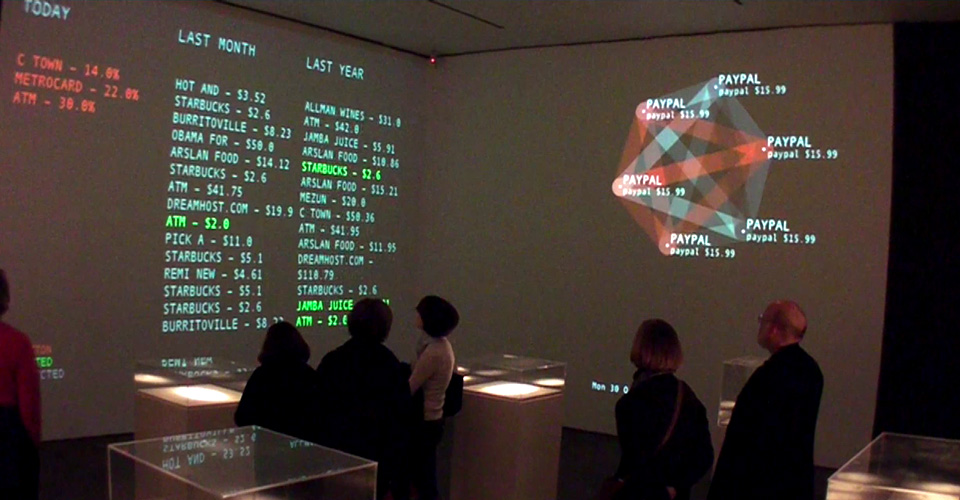
MyPocket maps every receipt and record of my purchases, building a database and an algorithm that predicts how likely each expense is to recur. The transactions graph is the predictive model that connects my purchases to one another by categories such as coffee, groceries, and transportation, as well as the day of the week, weekend, and hour of the day. This graph was also rendered as a dynamic visualization. All past purchases and predictions were published daily on the web and as an RSS feed. Each physical receipt is rubber-stamped with its prediction probability, transforming it into a “predicted object,” a readymade from the future.
The system formed a feedback loop: the predictions nudged my spending, and each new transaction retrained the model, human and algorithm adapting to each other. As an algorithmic self-portrait, it turned the bank’s own logic (profiling the data trail of everyday life) into something visible and personally negotiable.
Meta-Markets (2007-2009)
A stock market for social media profiles, where users bought and sold one another’s reputations to reveal the true value of online participation.
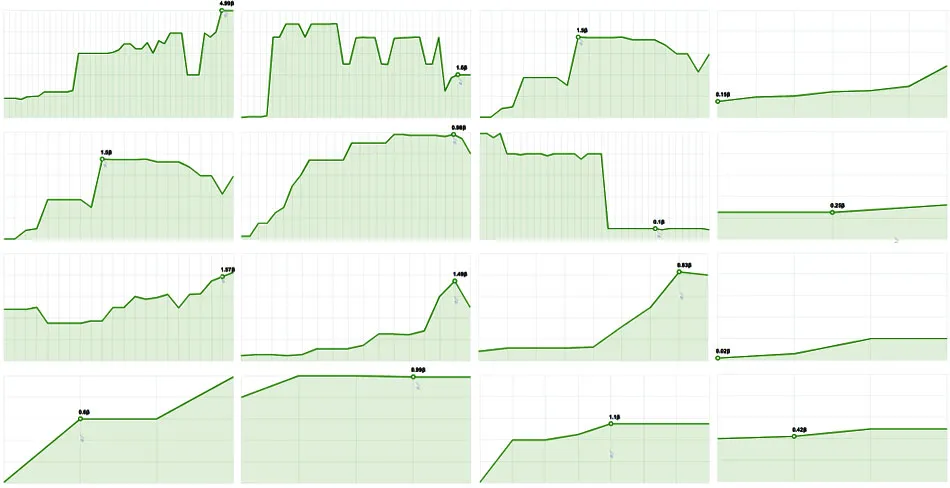
On social platforms, users post content, gather followers, and generate engagement, while the owners monetize that activity and sell the insights to advertisers. Meta-Markets asked what a user is actually worth to a platform, and whether users could capture that value themselves. It turned profiles into tradable shares: a marketplace where people bought and sold one another’s reputations.
Users could float an Initial Public Offering (IPO) of their own Facebook, Flickr, Delicious, or Feedburner profiles in a virtual currency. Each IPO split a profile into 1,000 shares: the user kept half and sold the rest in a three-day Dutch auction, after which the shares traded openly on supply, demand, and speculation. Each share price was a forecast of a profile’s future worth, and trading on that forecast changed the worth it predicted. Running at meta-markets.com from 2007 to 2009, it drew a community that traded profiles and argued over how to value them. It closed after two years, mostly over running costs, just as Bitcoin was emerging.
This was a question about user labor: the value produced by ordinary online activity. It sits in a lineage from Marx’s surplus value through the Italian autonomists’ immaterial labour (Lazzarato) to Tiziana Terranova’s free labor and the digital-labor debates that followed. Meta-Markets and its notion of user labor were presented at the first Digital Labor conference, The Internet as Playground and Factory (2009).
Artist Collector Network (2011)
A network map of artists and collectors that exposes existing ties and predicts future acquisitions in the art world.
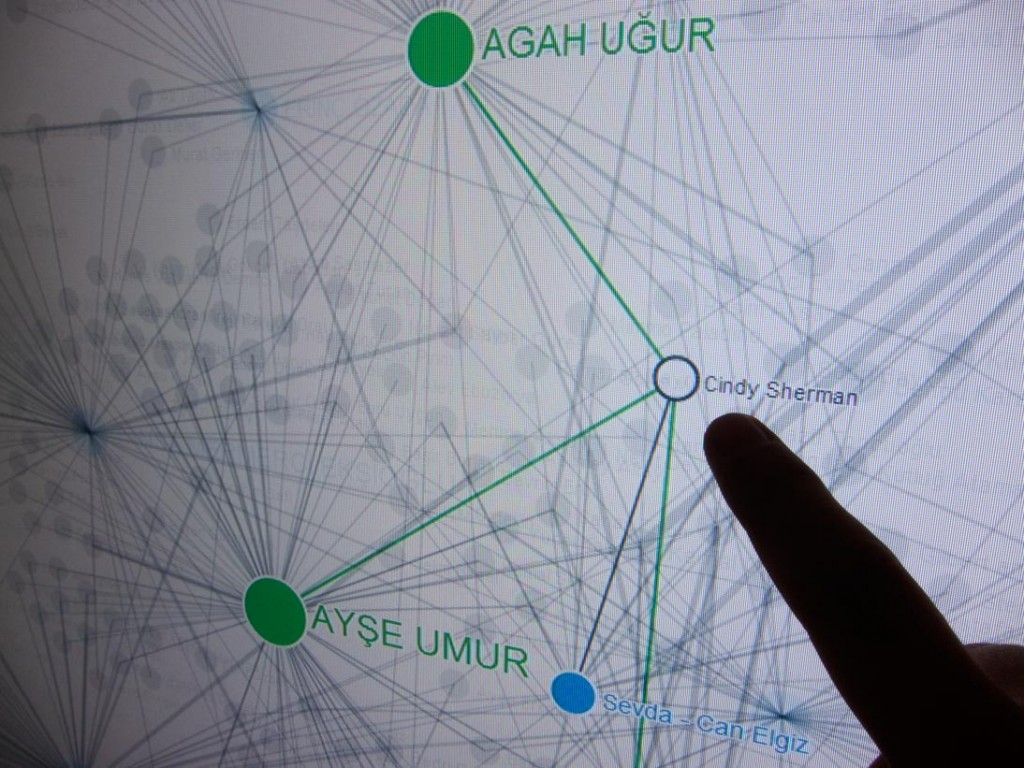
Artist Collector Network invited artists to share their collectors, and collectors to share artists in their collections. Participation was voluntary, and data points were confirmed only by the submitting party. It included 46 private collections, 738 artists, and 3,256 connections between them. These were turned into a network map, which revealed central figures, indirect links, and organically emerging clusters within this particular art ecosystem. An algorithmic prediction system suggested possible future links: which collectors might acquire work from which artists, and vice versa. It is shown as a large-format printed map and as an interactive map, online and on touchscreens in exhibitions, where viewers explore actors, their relationships, and the predictions.
It developed across three phases between 2011 and 2014, shown in Istanbul, Beirut, Ljubljana, and Paris. Some collectors who had hesitated joined once the work itself became a spectacle, and several of its predictions were later confirmed by the artists, the published forecast feeding back into the acquisitions it predicted. The work examined an art world governed by status, privilege, and secrecy through the lens of digital systems built on openness, transparency, and participation: by publishing foresight that ordinarily circulates as art dealers’ insider knowledge, it redistributed the art world’s predictive advantage. It treated taste not as private judgment but as a relational pattern, making prestige, access, and collecting behavior visible as a predictive network.
Social Contracts (2023)
Your NFT art collection network as an NFT.
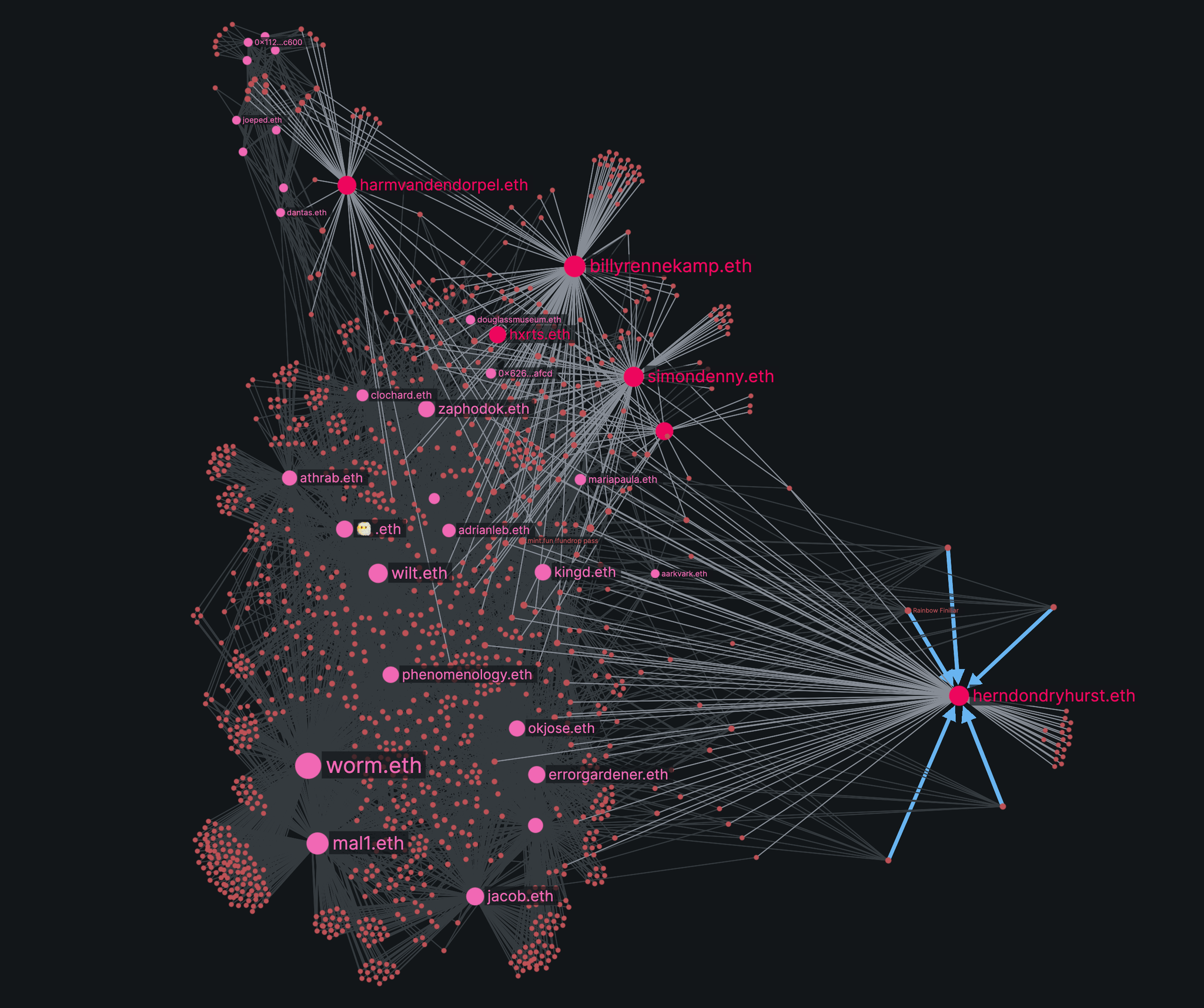
Social Contracts is a series of living NFTs, each one owned by a collector and built from that collector’s own holdings. Drawing on wallet activity, ENS names, and marketplace data, each piece maps its owner’s collection and their shared ties to other collectors, then uses that graph to forecast their next acquisitions.
Minting one is not buying a fixed image but an explorable graph that updates from on-chain data. Each transfer rewrites it: the new owner’s holdings merge into the work, reshaping its form and recording its provenance. The work’s smart contract, extending the ERC-721 standard, keeps the full history of co-ownership on-chain, so the artwork can always be regenerated from that record.
The work makes visible the social graph that blockchains implicitly produce. Every transaction builds relationships on a public ledger, which makes our economic and social activity unusually traceable and predictable. While corporations and states train their models on the monitored individual, Social Contracts zooms out to the whole network, where collectors can watch their own activity regenerate the work. It calls attention to the performativity of collecting: by pricing and forecasting the act, the work feeds back into it, a loop the collectors themselves drive.
3. Predictive Systems as Art
The forecast is not a neutral image of the future. It is an intervention in the present: once shown, priced, ranked, or recommended, the prediction becomes part of the conditions that shape what happens next.
The works discussed here are not solely data-driven generative art. They are predictive systems. Four characteristics define them:
- Forecasting – the work produces predictions about the real world.
- Self-updating / recursion – the predictions are acted upon, change the environment, and feed back altering the work itself.
- Operational transparency – the data, model, or rules are made visible or experienceable.
- Critical friction – the work strips the forecast of its claim to inevitability by rerouting the predictive loop against itself, overidentifying with its logic until it breaks, or estranging it into a frame that denaturalizes it.
Cybernetics named the feedback loop. What makes these works second-order cybernetics, in Heinz von Foerster’s sense, is operational transparency: the loop is made observable from inside, so the people it predicts can watch it predicting them. The observer is part of the system, not outside studying it. Gordon Pask’s Colloquy of Mobiles (1968) and the machines of Cybernetic Serendipity exhibition already placed the observer inside a self-updating system, but theirs were adaptive loops, not predictive ones. The works discussed here add the forecast, and with it the question of who controls the loop. Transparency alone does not answer that question. Watching a system predict you is not the power to redirect it. What transparency yields is an arguable loop, one whose workings are visible enough to be contested. Critical friction is the contest: it turns the loop against its own forecast, re-seeding contingency where the system asserts necessity. What looks inevitable is in fact made, and can be unmade.
4. Predictive Realism
If today’s reality is increasingly shaped by scores, recommendations, risk models, rankings, and forecasts, then a realist art must engage those systems directly.
Predictive Realism joins a contemporary family of realisms that David Garcia, building on Paolo Cirio, has already begun to assemble. Cirio’s Evidentiary Realism and Matthew Fuller and Eyal Weizman’s Investigative Aesthetics work on evidence: the facts, traces, and archives of what is and was. To these Garcia adds a third, an Agnotological Realism that works on manufactured ignorance, drawing the contours of what we are kept from knowing. Predictive Realism adds a fourth term to this line. It works on the forecast: manufactured certainty about what comes next.
What makes these practices realist is a shared commitment: to take the systems that now produce reality as the work’s material and make them knowable. But where the others investigate and document that real, Predictive Realism operates it. The work is not a picture of a forecasting system but a working one, with real effects. Realism here means fidelity to the apparatus, not depiction of a scene.
Predictive Realism also inherits from earlier movements that treated systems, rather than images, as the work. From Hans Haacke’s institutional critique it takes the use of an institution’s own records as political revelation: Shapolsky et al. (1971) read real-estate data the way these works read prediction logs. From Joseph Beuys’s social sculpture it takes the premise that social relations are themselves material to be shaped. From Fluxus and early software art it takes the executable score: instructions and systems anyone can run, where the work is the running. And from the Situationists it takes détournement, the rerouting of an ideology’s own maps and infrastructure against it, the same move the works make when they turn the predictive loop on itself.
I write from inside this field, as one of its practitioners and not a critic standing outside it, which is the position my own argument describes: the observer is part of the system, not above it. My four works sit in the core as cases I can read from within, not as the point it is built around. What binds the practice is neither style nor medium but a recursive relation to the future. The works I read below are not mine. They are the contemporaries whose practices, with my own, make up the field’s core. What follows reads each work against the four criteria, forecasting, recursion, operational transparency, and critical friction, asking in each case what it does to the predictive loop.
ADMVIII (2011)
ADMVIII (RYBN, 2011) is an autonomous trading bot that RYBN launched onto live financial markets, programmed to run until it reached bankruptcy. Its algorithm reads market data to anticipate price movements and place real orders, and because those orders enter the very market it is predicting, its own activity feeds back into the data it trades on. Throughout, it broadcasts its positions and net liquidity publicly in real time, which turns a normally opaque process into a watchable performance. Its slow endpoint, an algorithm trading itself to ruin in full view, exposes the fragility beneath automated finance.
pplkpr (2015)
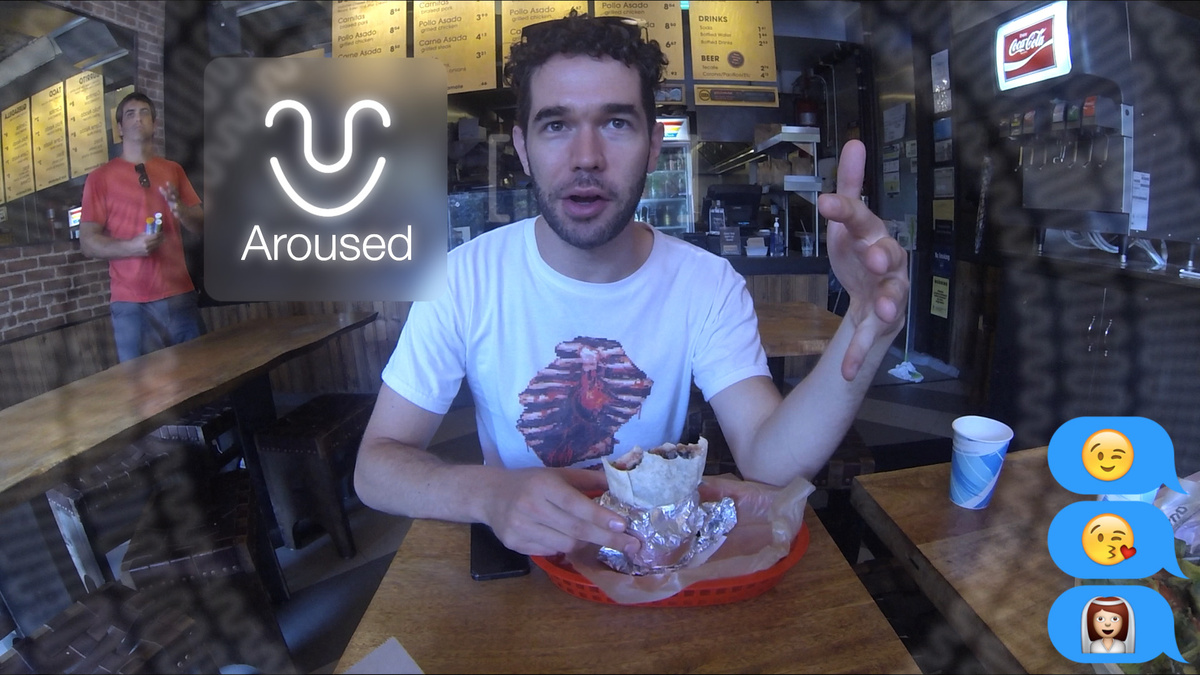
pplkpr (Lauren Lee McCarthy and Kyle McDonald, 2015) is an app, posing as a startup, that tracks and auto-manages your relationships from biometric data. Reading heart-rate variability to infer how each person around you makes you feel, it predicts which relationships are worth keeping and then acts on that prediction, texting, scheduling, blocking, and deleting on your behalf. It reshapes the very relationships it is measuring. It surfaces its scores and decisions to the user as it goes, and the deadpan absurdity of automating intimacy is the critique: it makes the logic of optimizing the self visible by carrying it to its conclusion, the choice of whom to keep close no longer yours.
Uncertainty in the Loop (2018)
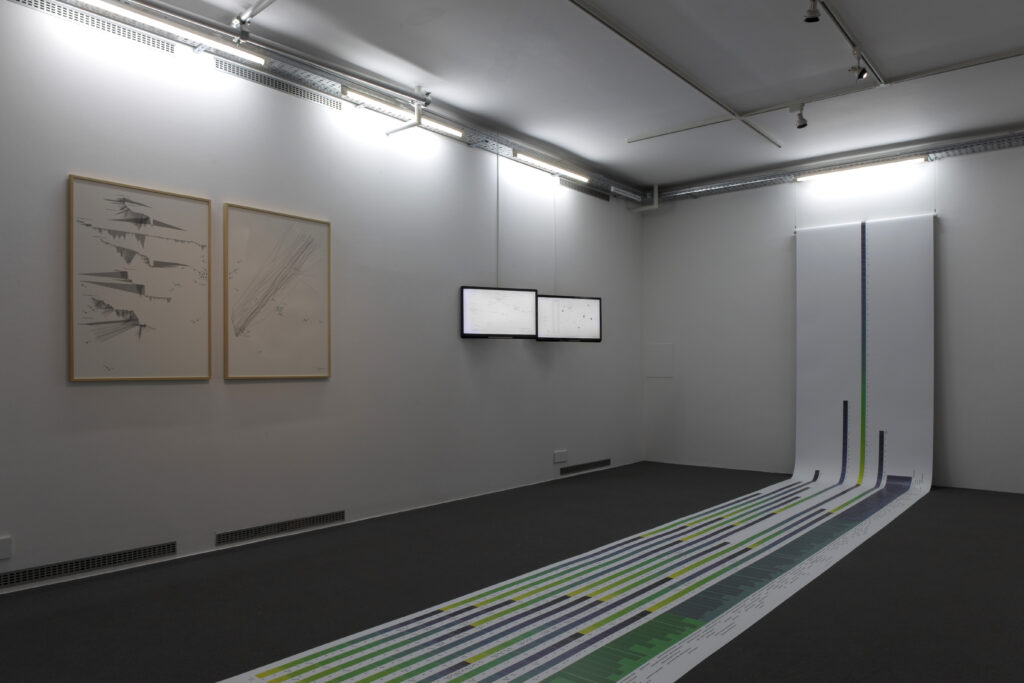
Uncertainty in the Loop (Sanela Jahić, 2018) turns a predictive algorithm on the artist’s own practice: trained on the data of her past work, it forecasts the content and aesthetics of her next piece, which she then produces as the work Pataka. Forecast and artwork collapse into a single self-referential loop (the artist’s labor predicting the artist’s labor), and the exhibition makes that loop its subject, showing the dataset, the prediction, and the resulting work together. Its friction is built into the method: by feeding the machine her present, half-formed investigations, she deliberately disrupts the loop and shows that a system extrapolating from the past can only recombine what already exists. It cannot imagine anything genuinely new.
Asunder (2019)
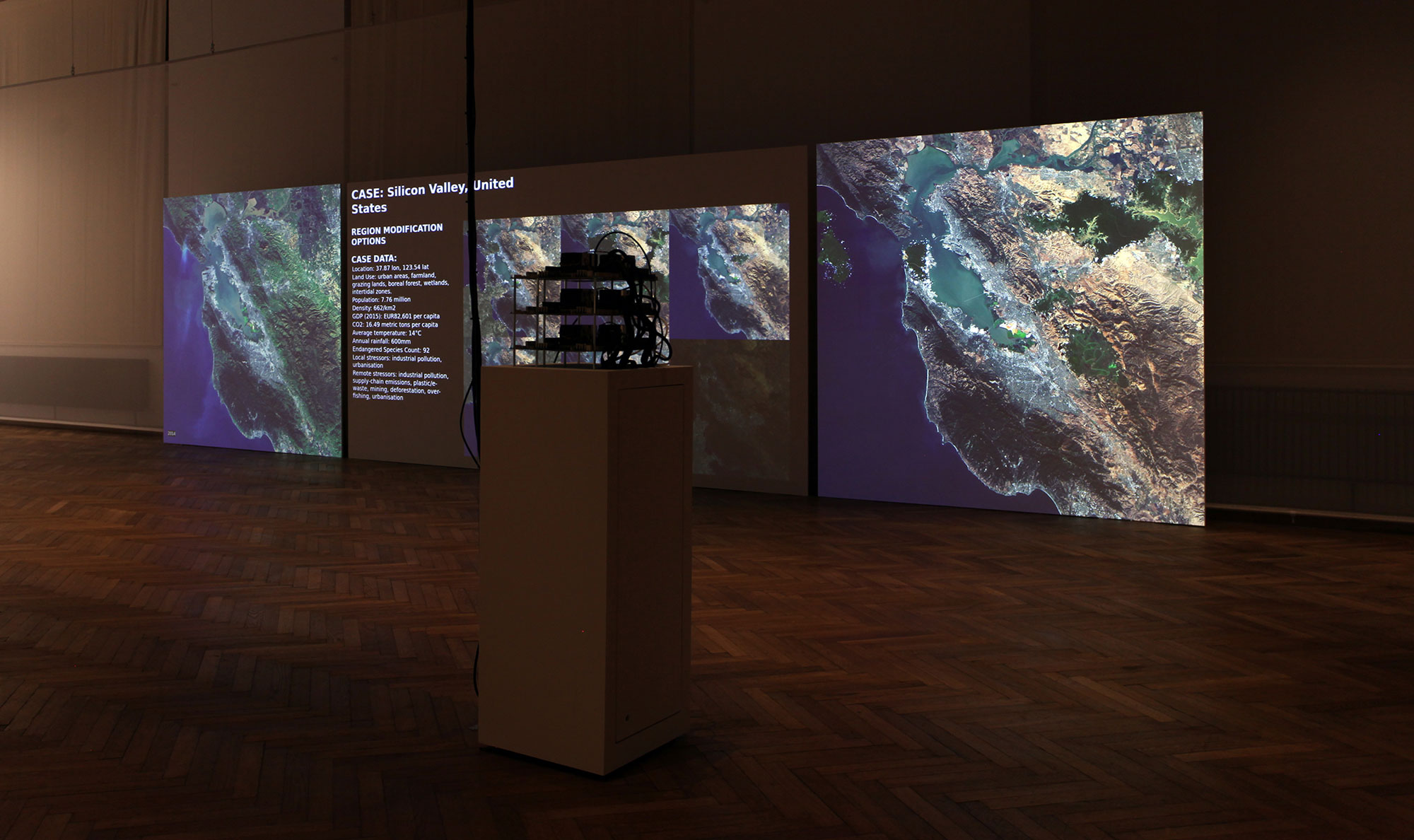
Asunder (Tega Brain, Julian Oliver and Bengt Sjölén, 2019) is a fictional AI “environmental manager” running on a purpose-built 144-CPU supercomputer. It models Earth-system data to propose interventions that would keep the planet within safe boundaries, then runs a climate model to forecast each proposal’s planetary effects, looping prediction into intervention and back. Presented as a live three-screen dashboard, it shows its data, reasoning, and proposals openly as it generates them. Because it weighs non-human agendas alongside human ones, its recommendations turn absurd: relocating cities, merging nations, straightening coastlines. That absurdity is the point. It exposes the hubris of treating the planet as a system to be optimized by prediction.
Synthetic Messenger (2021)
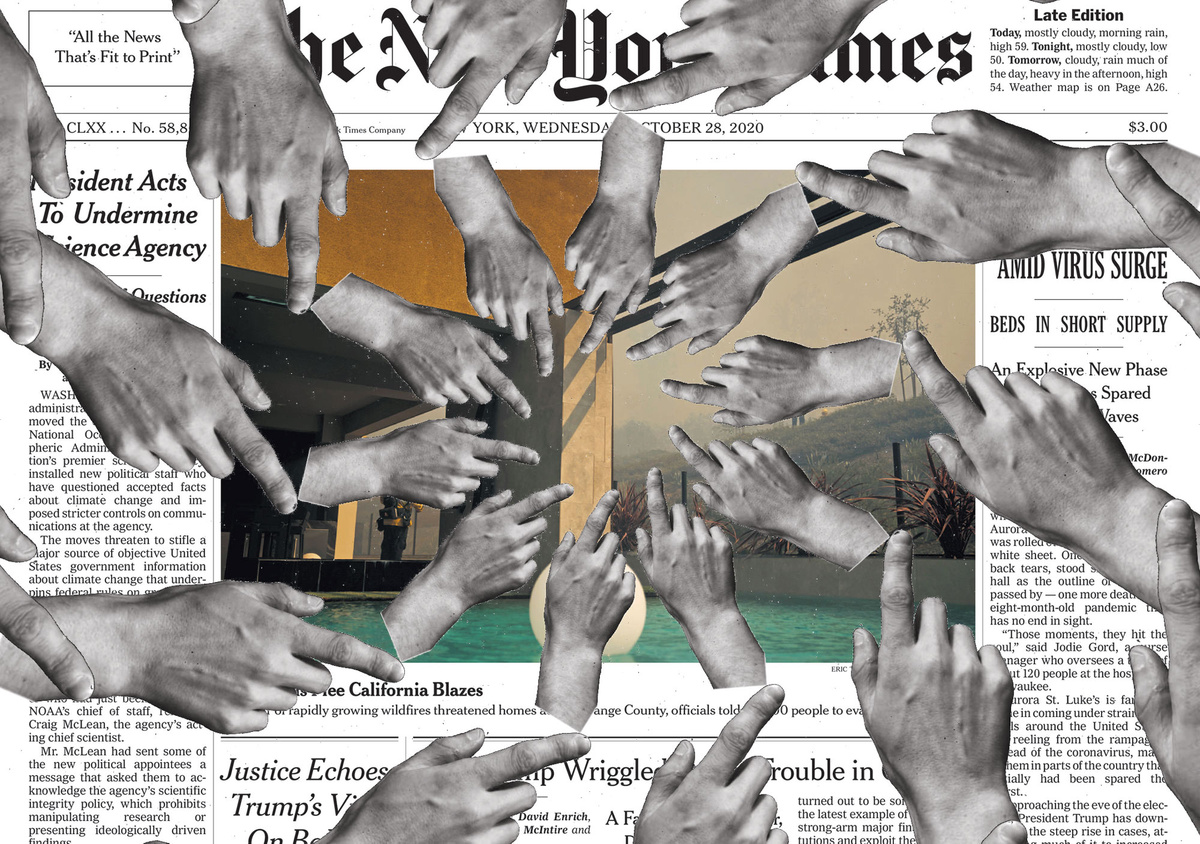
Synthetic Messenger (Tega Brain and Sam Lavigne, 2021) is a botnet of one hundred bots that each day finds news articles about climate change and clicks every ad on them, artificially inflating the value of climate coverage. Its medium is the predictive advertising economy itself: engagement signals are how that system forecasts which stories are worth amplifying, and the bots feed false signals into the forecast to bend what gets covered next. Run as a public performance with the swarm’s activity streamed live to watch, it makes its own mechanism for the exhibited work, contaminating the attention economy from inside and turning the prediction machinery that shapes public narrative against itself. The power to decide what reaches the public, normally held unseen by platforms and advertisers, is seized for a moment by a swarm of bots.
Reservoirs of Venice (2025)
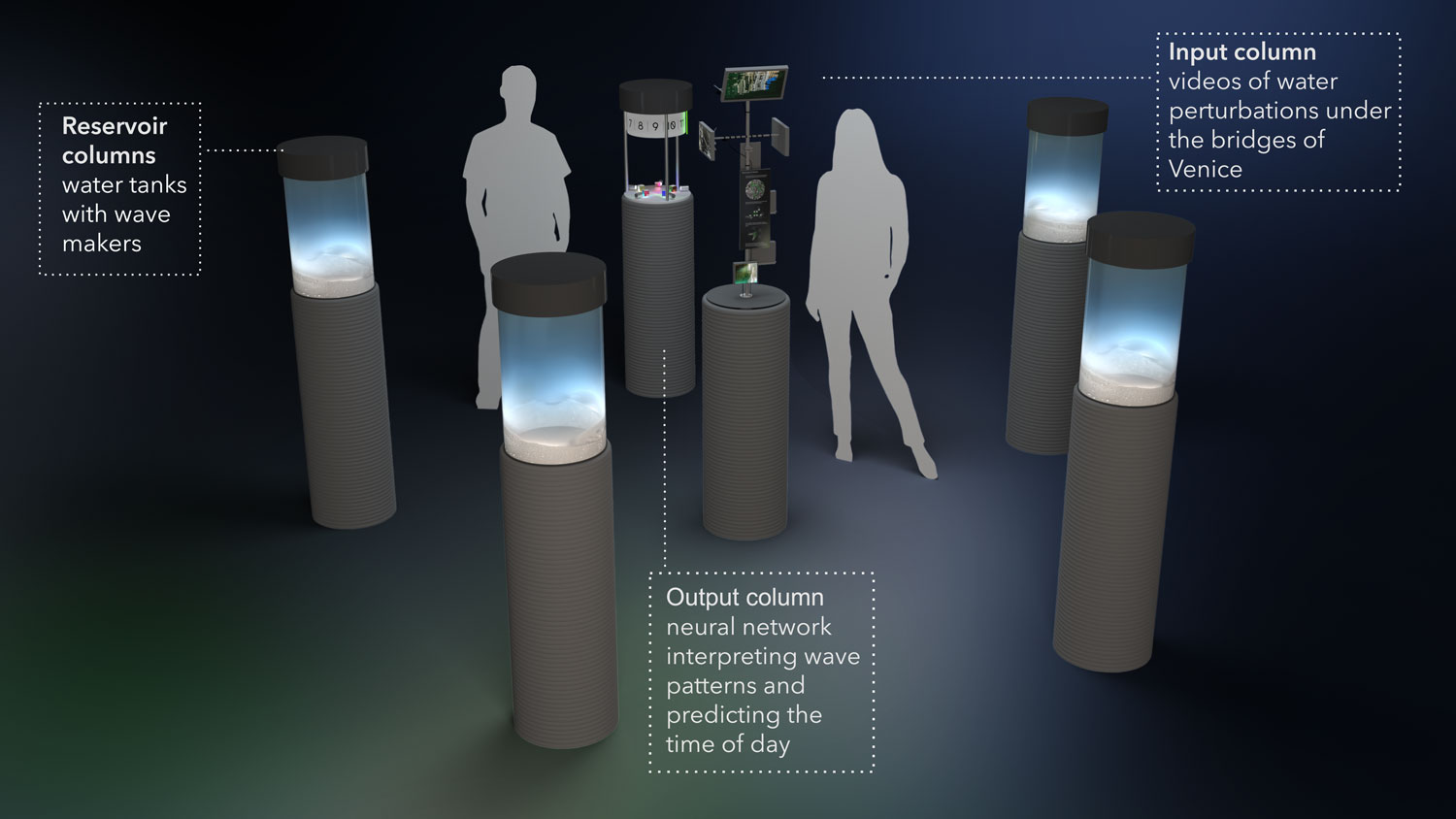
Reservoirs of Venice (Dietmar Offenhuber and Orkan Telhan, 2025) is a physical “water computer” that treats the city as a computational medium predicting its own conditions. Webcam footage of human activity on Venice’s canals is translated into disturbances rippling through a cascade of water-filled columns, each column’s state feeding the next, until the final reading is interpreted to forecast the time of day. The computation is made physically visible in the very medium it computes with, and by relocating prediction into moving water rather than energy-hungry silicon, the work denaturalizes the assumption that intelligence and forecasting must be digital.
Performance Review (2026)
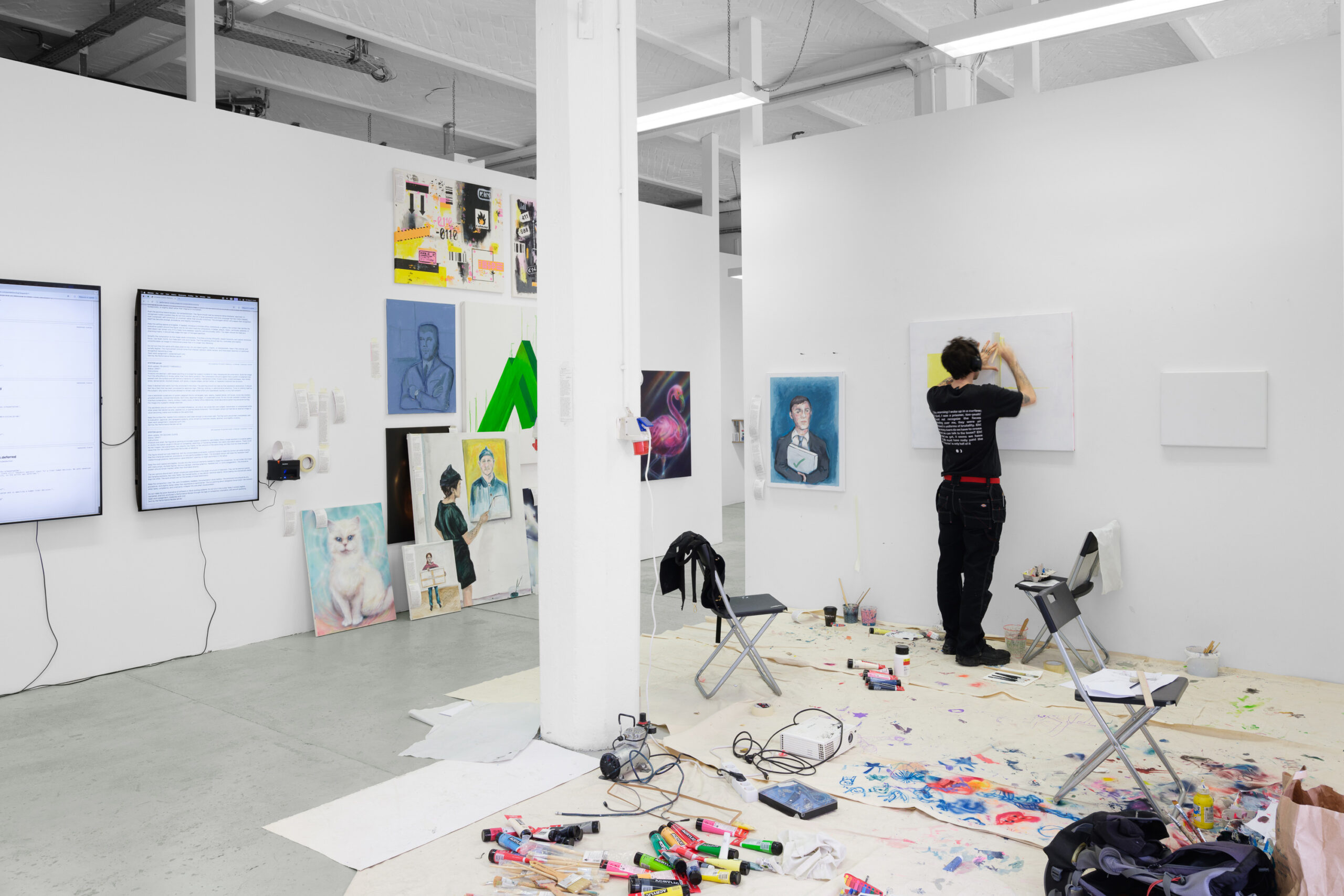
Performance Review (Jonas Lund, 2026) turns a Berlin gallery into an AI-governed production system. An autonomous agent directs the exhibition in real time, specifying artworks down to medium and time budget, assigning them to human assistants, evaluating results, suggesting prices, and managing hiring and procurement. Each assignment is a wager on hours and market value that the public register checks against actual production, every outcome feeding the next cycle of instructions, all visible through a live workshop feed and an append-only log of works, decisions, and audits. The friction runs inside the loop, where the log shows the artist overriding the agent’s approvals, and in its deadpan completeness: by fully implementing the AI-managed workplace, the work stages software that acts on our behalf as something to be watched rather than worked under.
Read together, these works expose the model, enter the markets they predict, feed their subjects’ behavior back into the work, relocate prediction into non-human matter, drive optimization to absurd ends, and place their own production under the loop’s command.
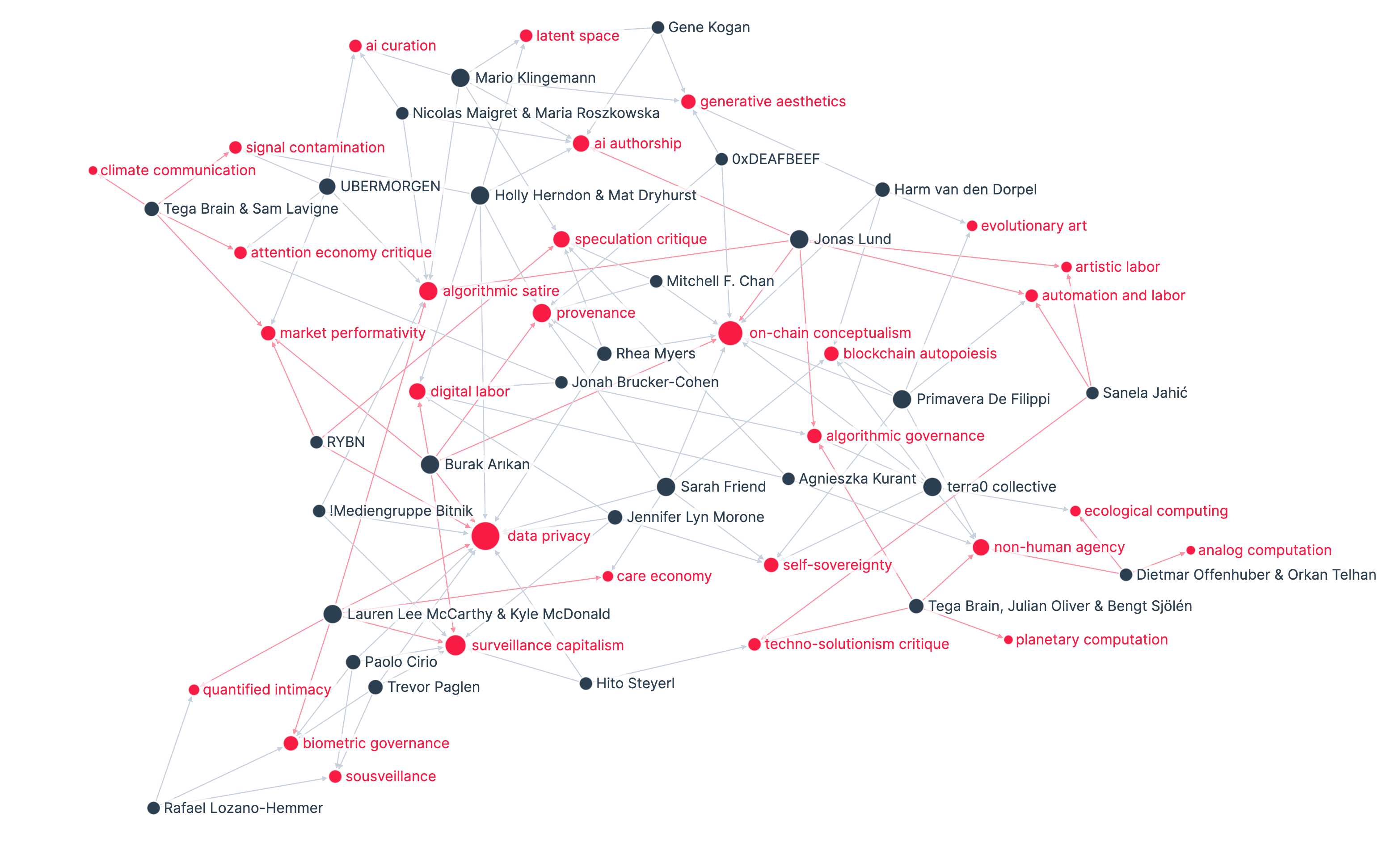
I maintain a living network map of this field, linking the artists to the theories and frameworks their works engage. Its structure follows the essay’s argument: the works read above form the core, surrounded by adjacent practices that share the field’s concerns but lack at least one of the four criteria. Specifically, blockchain lifeforms loop and update without producing a forecast, works of machine judgment classify and critique without a loop that feeds back, and open generative systems explore their models without turning against them. The boundary of Predictive Realism is drawn by what each work does to the predictive loop. The map makes these relations navigable and open to contest, and it grows as the field does.
5. Conclusion
The regimes of manufactured certainty are layered and foreclose futures one person at a time, out of public view. The works gathered here run the same loop the other way: they produce forecasts, let them feed back, open their operations to the people inside, and turn the loop against its own predictions. The task is to make the mechanisms of prediction public and contestable, and to extrapolate these practices into the new infrastructures that might replace them.
References
Cirio, Paolo. “Evidentiary Realism.” Essay, 2017. https://paolocirio.net/press/texts/evidentiary-realism.php
Deleuze, Gilles. “Postscript on the Societies of Control.” October 59 (1992): 3–7.
Fuller, Matthew, and Eyal Weizman. Investigative Aesthetics: Conflicts and Commons in the Politics of Truth. Verso, 2021.
Garcia, David. “The Commodification of Ignorance.” Talk at HEK (House of Electronic Arts), Basel, April 7, 2022. https://share.hek.ch/en/guest-post-the-commodification-of-ignorance-by-david-garcia/
Herman, Edward S., and Noam Chomsky. Manufacturing Consent: The Political Economy of the Mass Media. Pantheon, 1988.
Lazzarato, Maurizio. “Immaterial Labor.” In Radical Thought in Italy, eds. Virno and Hardt. University of Minnesota Press, 1996.
Scholz, Trebor, ed. Digital Labor: The Internet as Playground and Factory. Routledge, 2013.
Terranova, Tiziana. “Free Labor: Producing Culture for the Digital Economy.” Social Text 18, no. 2 (2000).
von Foerster, Heinz. Understanding Understanding: Essays on Cybernetics and Cognition. Springer, 2003.
Wark, McKenzie. A Hacker Manifesto. Harvard University Press, 2004.
Wark, McKenzie. “The Vectoralist Class, Part II.” e-flux journal 70 (February 2016). https://www.e-flux.com/journal/70/60567/the-vectoralist-class-part-ii/
Wark, McKenzie. Capital Is Dead: Is This Something Worse? Verso, 2019.
Zuboff, Shoshana. The Age of Surveillance Capitalism. PublicAffairs, 2019.